What breed is that goat?
If you saw a goat in a field or on video and want to know what it is, work through four things, in the order they actually help: ears, size, coat, then horns last.
Ears carry the most signal. Long, pendulous ears that hang down toward the mouth point to the Nubian type 1. Ears reduced to a small stub or missing altogether point to LaMancha 2. Ears that stand up and point forward cover most of the rest of the dairy breeds, several meat breeds, and most of the miniatures.
Size narrows things further: a genuinely small goat is one of the miniature breeds or Pygmy, while a large, heavily built animal points toward Boer, Kalahari Red or Savanna. Coat does the rest of the work on the specialist breeds: a dense curly ringlet fleece is Angora 3, a soft cashmere-type down under coarser guard hair is Cashmere or Savanna 45, and a handful of color patterns are close to diagnostic on their own, like the Oberhasli's bay coat with black chamois markings 1 or the Boer's white body with a contrasting red head 6.
Horns are the weakest identifier. Most dairy goats are disbudded as kids for handler safety, so a hornless adult usually tells you about a breeder's choice, not the breed, and several standards accept horned and polled animals as equally normal.
Start with the ears
Long, wide, pendulous ears that hang down past the jaw are the single most reliable tell here. That shape belongs to the Nubian, called Anglo-Nubian outside the US, whose standard calls for exactly this ear alongside a strongly convex "Roman" nose 1. The same ear, on a smaller frame, belongs to Mini Nubian, whose own standard also requires long, pendulous ears reaching the mouth or beyond 7. Two meat and fiber breeds share the shape without the Nubian dairy build: Boer 8 and Savanna 9. Dairy-built and small points to Nubian or Mini Nubian; large and meaty points to Boer or Savanna.
At the other extreme, a goat with no visible external ear, or a tiny stub an inch or two long, is a LaMancha. AGS's standard describes two accepted variants: an "elf" ear with a bit of cartilage, and a "gopher" ear with none, both breed-defining rather than a fault 2. The same trait, smaller, is Mini LaMancha, capped at 1.5 inches by its own standard 10. Nothing else here looks like either: an apparently earless goat is LaMancha at standard size or Mini LaMancha in miniature, full stop.
Most remaining breeds carry erect, forward-pointing ears, a group that includes the Swiss-type dairy breeds: Alpine 2, Oberhasli 1, Saanen 1, Sable 1 and Toggenburg 1, plus Golden Guernsey, whose ears sit low in a "bonnet" position but are still classed erect, never pendulous 11. It also covers Nigerian Dwarf 2 and Pygmy 12, the meat breed Kiko 13, and all six MDGA-standard minis: Mini Alpine, Mini Guernsey, Mini Oberhasli, Mini Saanen and Mini Toggenburg 14. An erect ear rules out Nubian-type and LaMancha; size and coat do the rest.
A smaller group sits in between. The Myotonic, better known as the Fainting Goat, carries a semi-pendulous ear with a characteristic wave partway down the front edge, per its registry's own description 15. Spanish goats, a variable landrace, are also recorded with semi-pendulous ears 16. Nigora, a fiber cross, ranges from erect to semi-pendulous by individual 17, a weaker tell than for most breeds here. Five breeds have no ear type recorded in the sources compiled: Angora, Cashmere, Damascus, Kalahari Red and Pygora. For those five, coat and color carry more of the identifying weight.
The full breed table
The table below covers all 28 breeds, grouped by ear type so it works as a lookup once you've narrowed things down above. "Not recorded" means the sources compiled for that breed's record didn't state a value for that field, not that the trait doesn't exist.
| Breed | Ears | Size class | Coat | Horns | Distinguishing note | Source | |
|---|---|---|---|---|---|---|---|
Boer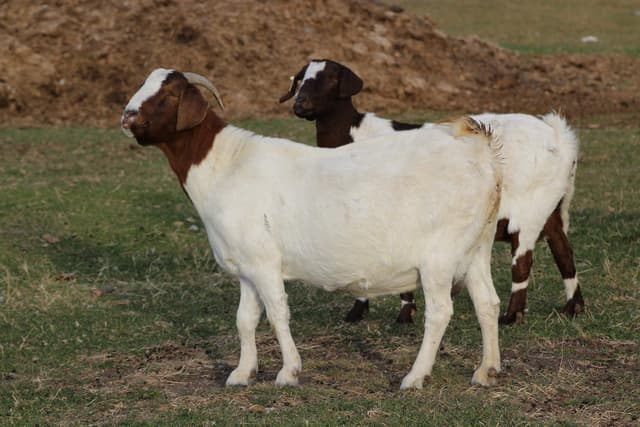 | Pendulous | Large | Smooth, short | Horned | White body with a contrasting red head is close to diagnostic on its own | 86 | Pendulous ears, large |
Nubian (Anglo-Nubian)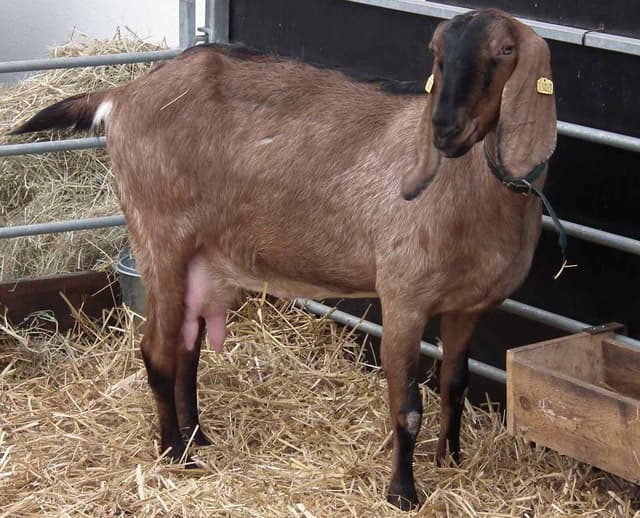 | Pendulous | Standard | Smooth, short | Not recorded | Strongly convex "Roman-nosed" profile paired with the long ears | 12 | Pendulous ears, standard |
Mini Nubian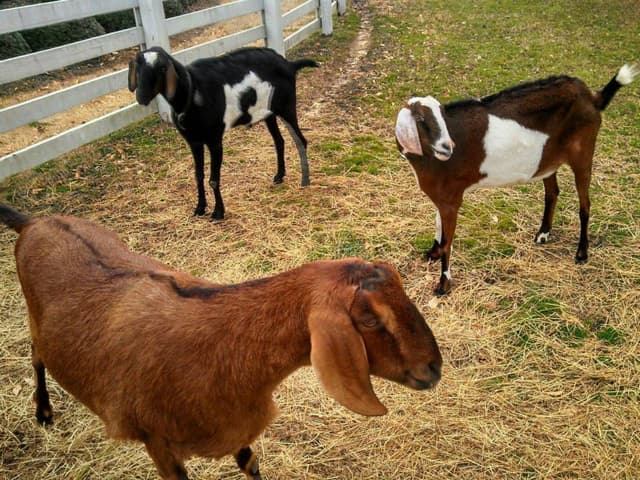 | Pendulous | Miniature | Smooth, short | Not recorded | Full-size Nubian ears and Roman nose on a miniature dairy frame; size, not ear shape, separates it from standard Nubian | 7 | Pendulous ears, miniature |
Savanna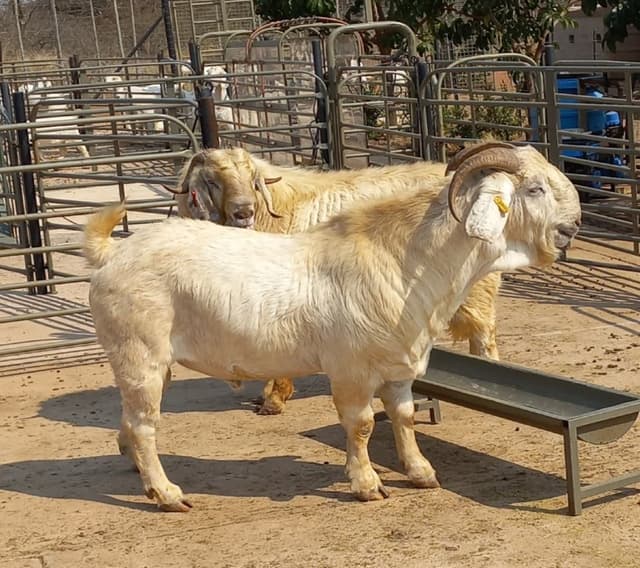 | Pendulous | Large | Double-coated with cashmere-type down | Horned | Solid white, heavily muscled meat frame that grows a winter undercoat | 9185 | Pendulous ears, large |
Fainting Goat (Myotonic)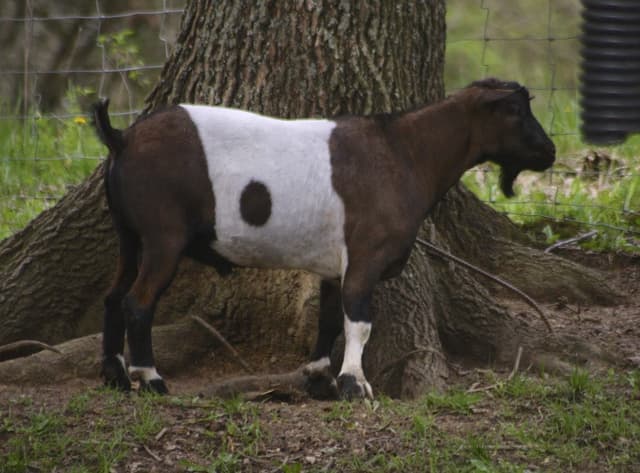 | Semi-pendulous, with a wave partway down the front edge | Standard | Varies | Horned or polled | Momentary muscle stiffening when startled, alongside prominent, protruding eye sockets | 15 | Semi-pendulous ears, standard |
Spanish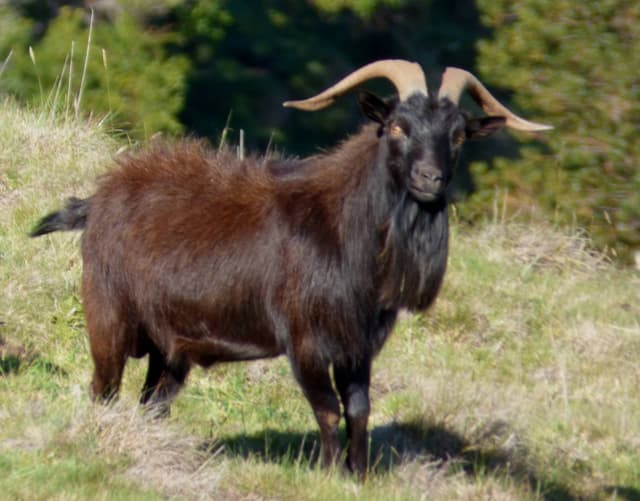 | Semi-pendulous | Standard | Varies | Horned | A landrace, not a fixed type; size, color and horn shape vary widely by bloodline | 1619 | Semi-pendulous ears, standard |
Nigora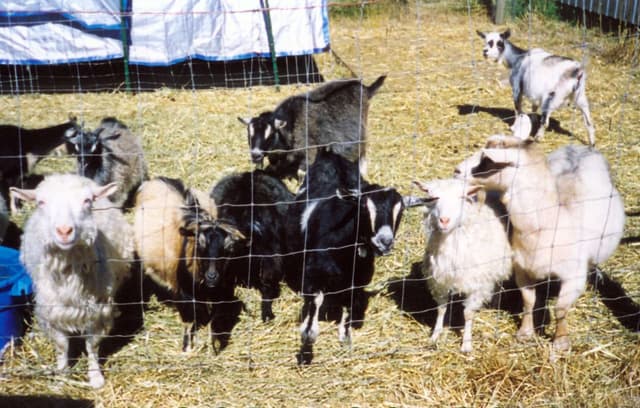 | Erect to semi-pendulous (varies by individual) | Miniature | Cashgora fleece | Not recorded | A refined miniature-dairy build; a Roman nose is a disqualifying fault under the breed standard | 17 | Erect to semi-pendulous ears, miniature |
LaMancha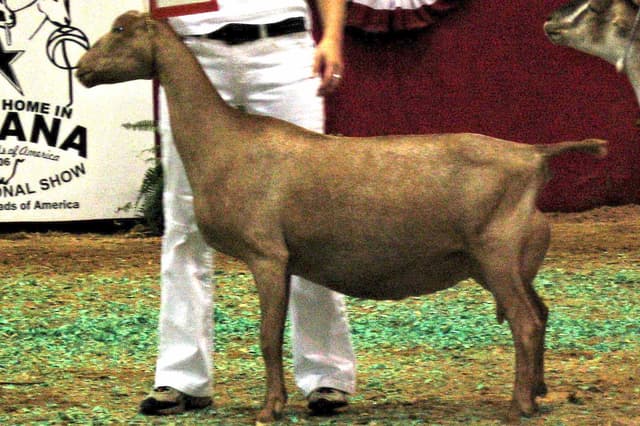 | Elf or gopher (no external ear) | Standard | Smooth, short | Not recorded | The only US breed with this ear type at standard size | 12 | Elf or gopher ears, standard |
Mini LaMancha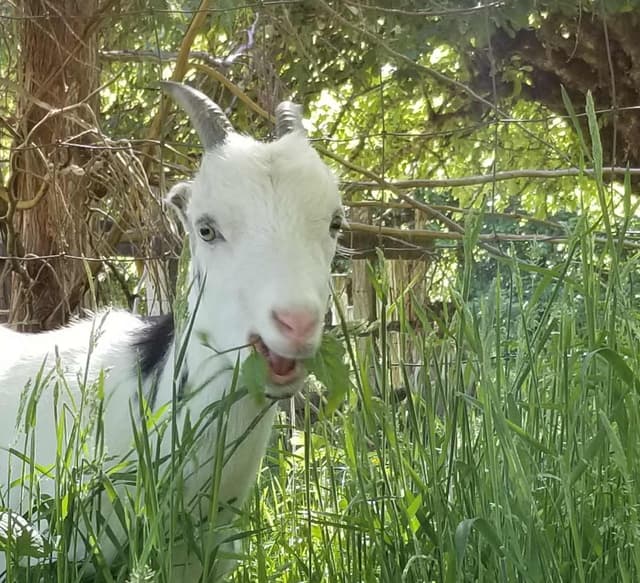 | Elf or gopher, capped at 1.5in | Miniature | Smooth, short | Not recorded | Same earless look as LaMancha, on a miniature dairy frame | 2010 | Elf or gopher ears, miniature |
Alpine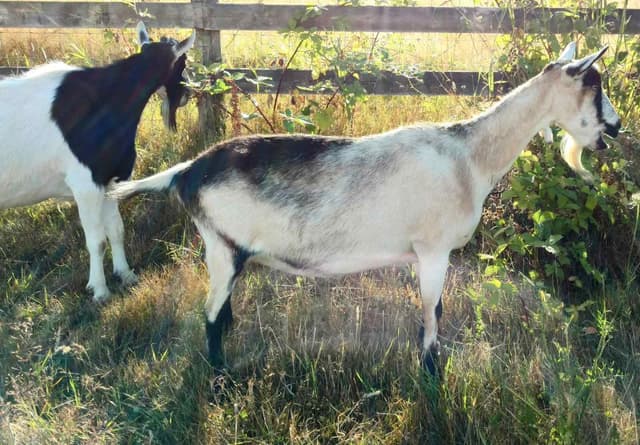 | Erect | Standard | Smooth, short | Not recorded | French color-pattern names (cou clair, cou blanc, chamoisee) rather than one fixed color | 21 | Erect ears, standard |
Golden Guernsey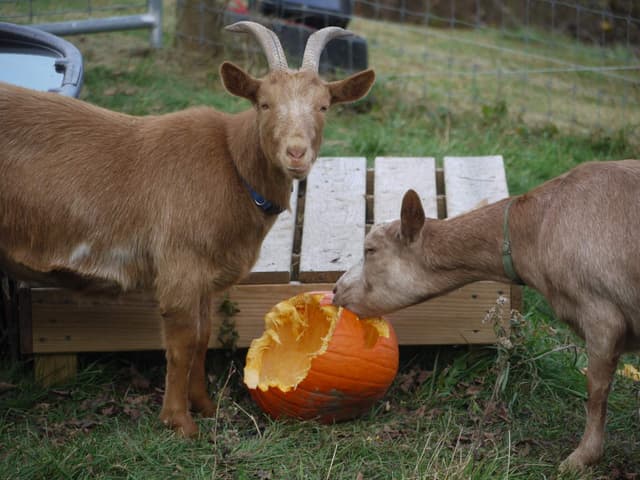 | Erect, carried low in a "bonnet" position | Standard | Varies | Not recorded | Gold body color and skin, ranging pale flaxen to deep bronze | 11 | Erect ears, standard |
Kiko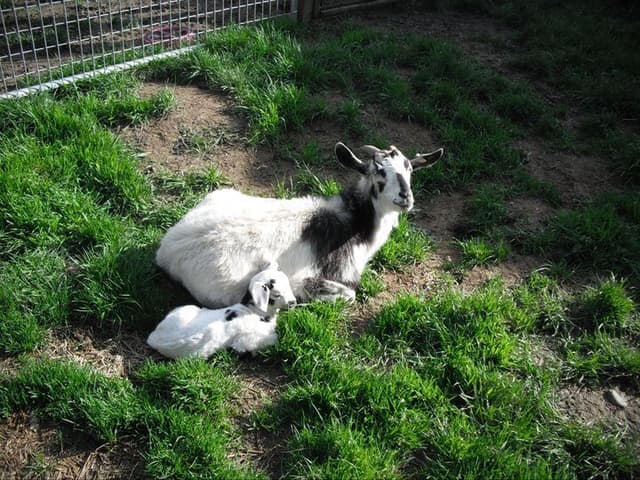 | Erect | Standard | Varies | Horned | Bucks obviously larger and more masculine than does; selected on production, not showring looks | 1321 | Erect ears, standard |
| Mini Alpine | Erect | Miniature | Smooth, short | Not recorded | Leaner and more refined than the other MDGA minis, inheriting Alpine's French color names | 1422 | Erect ears, miniature |
| Mini Guernsey | Erect, low "bonnet" carriage | Miniature | Varies | Not recorded | Gold body color inherited from Golden Guernsey, on a miniature frame | 23 | Erect ears, miniature |
Mini Oberhasli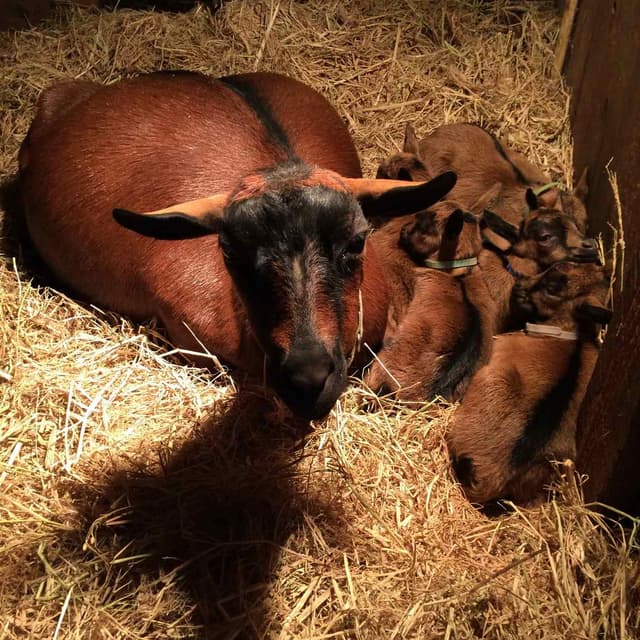 | Erect | Miniature | Smooth, short | Not recorded | Bucks must be red bay with black chamois markings, same as standard Oberhasli | 24 | Erect ears, miniature |
| Mini Saanen | Erect | Miniature | Smooth, short | Not recorded | Must be solid white or cream to register as Purebred | 2522 | Erect ears, miniature |
| Mini Toggenburg | Erect | Miniature | Smooth, short | Not recorded | Fawn-to-chocolate coat with the same white Toggenburg markings as the standard breed | 26 | Erect ears, miniature |
Nigerian Dwarf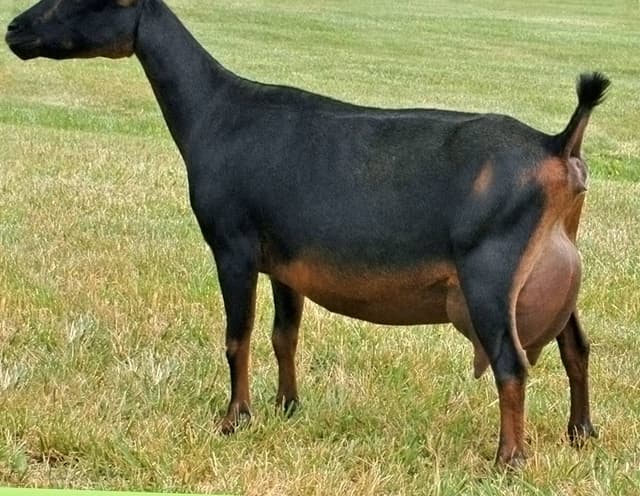 | Erect | Miniature | Straight | Not recorded | Any color or pattern is accepted; occasional blue eyes | 21 | Erect ears, miniature |
Oberhasli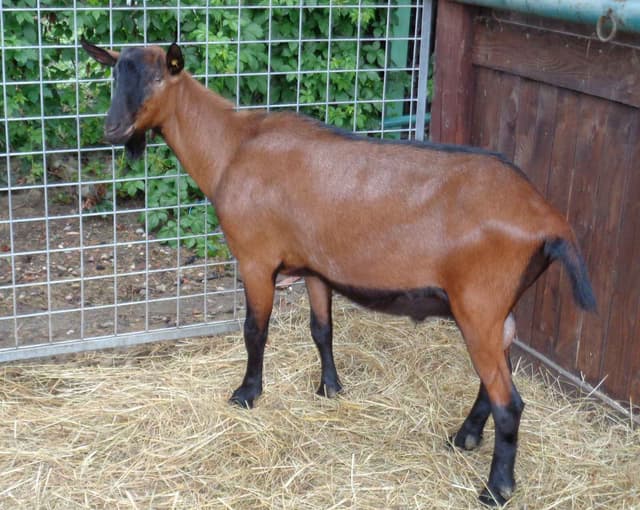 | Erect | Standard | Smooth, short | Not recorded | Bay coat with black chamois facial stripes and leg markings, close to diagnostic on its own | 1 | Erect ears, standard |
Pygmy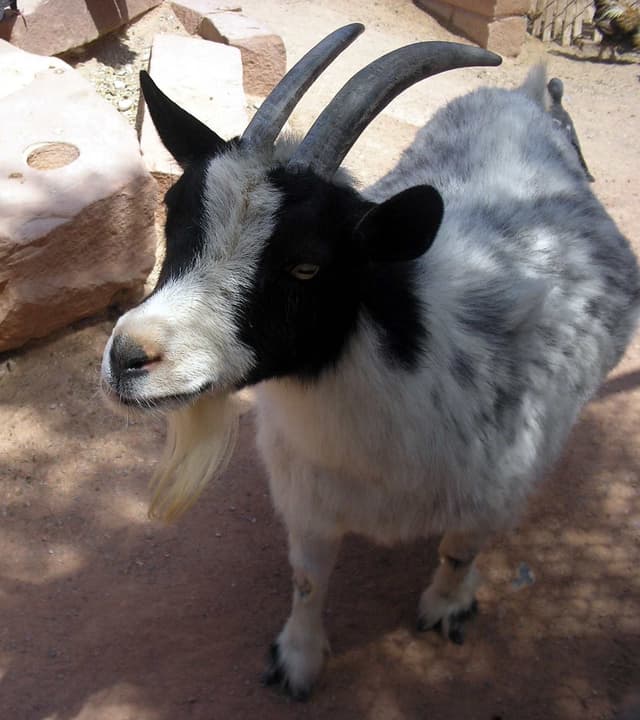 | Erect | Miniature | Straight | Horned | Cobby, full-barrelled, heavily muscled body, not a small dairy build | 12 | Erect ears, miniature |
Saanen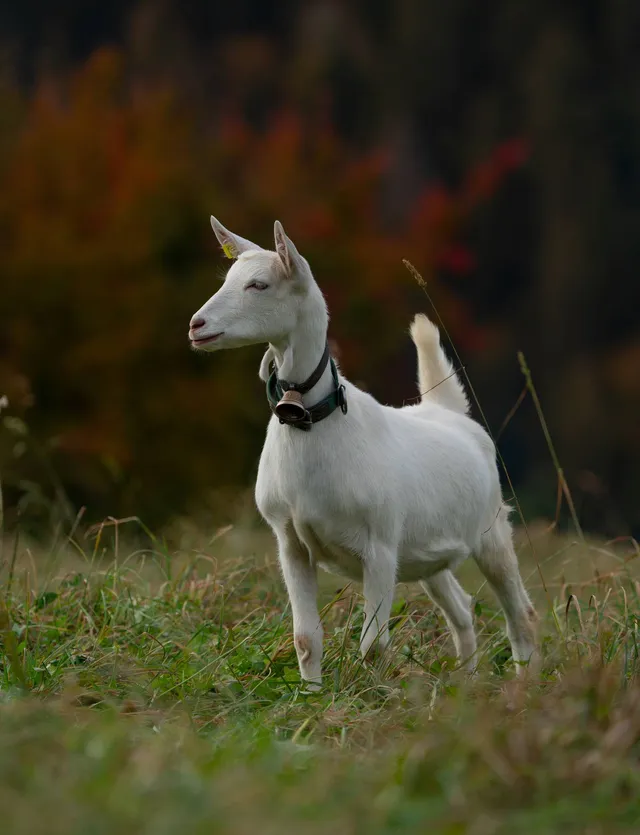 | Erect | Standard | Smooth, short | Not recorded | Solid white or light cream, with no pattern recorded in the standard | 1 | Erect ears, standard |
| Sable | Erect | Standard | Smooth, short | Not recorded | The Saanen standard's color twin: any color except solid white or cream | 1 | Erect ears, standard |
Toggenburg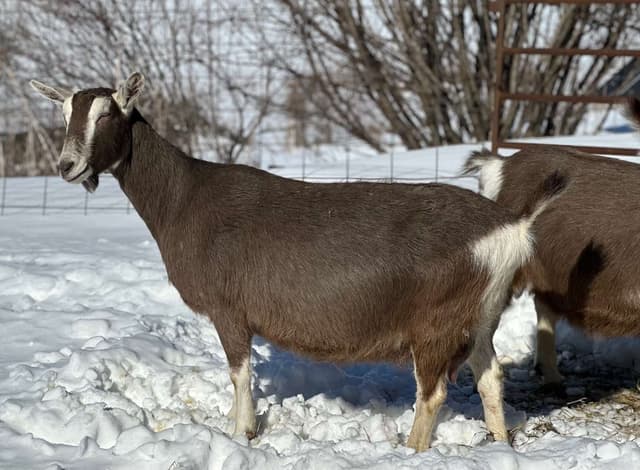 | Erect | Standard | Smooth, short | Not recorded | Fawn-to-chocolate coat with distinctive white face and leg markings | 1 | Erect ears, standard |
Angora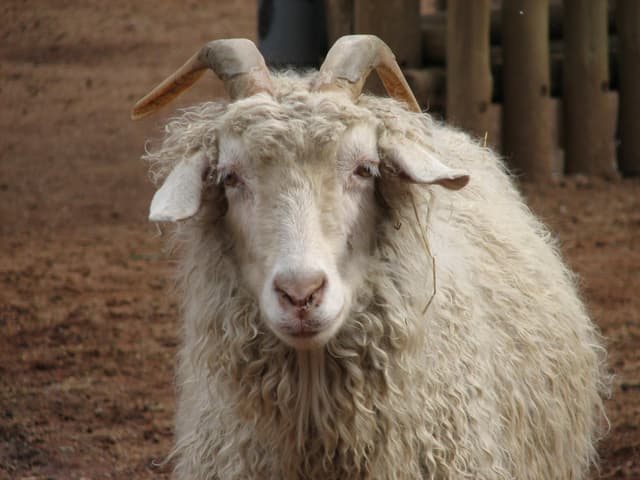 | Not recorded | Standard | Mohair fleece (long ringlets) | Horned | Long, lustrous ringlet-forming mohair on both sexes, sheared twice a year | 273 | Standard size |
Cashmere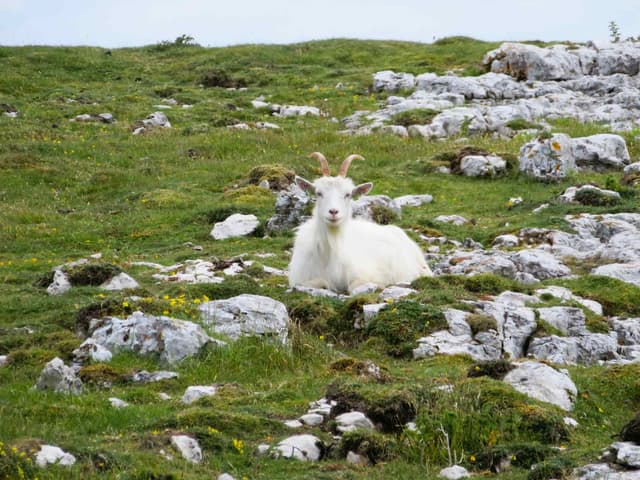 | Not recorded | Standard | Double-coated with down | Not recorded | Qualifies on fiber traits, not a fixed body type or color; any color is accepted | 42829 | Standard size |
Damascus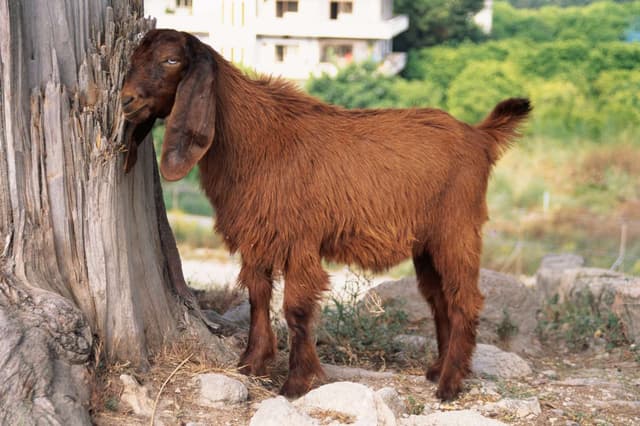 | Not recorded | Standard | Not recorded | Not recorded | Reddish-brown coat is the only appearance trait recorded in sources compiled here | 3031 | Standard size |
Kalahari Red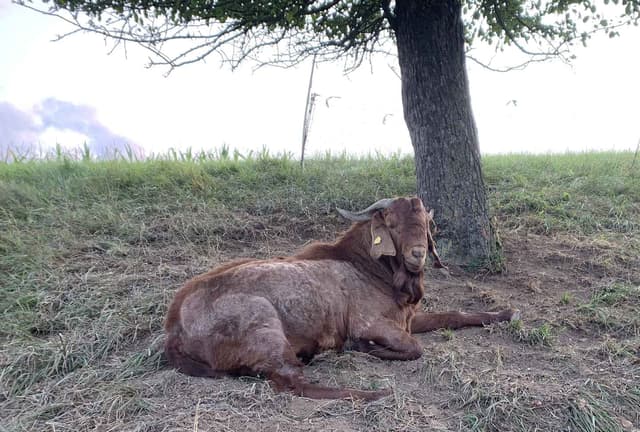 | Not recorded | Large | Not recorded | Not recorded | Red-coated, with bucks consistently larger than does across measured traits | 323334 | Large size |
Pygora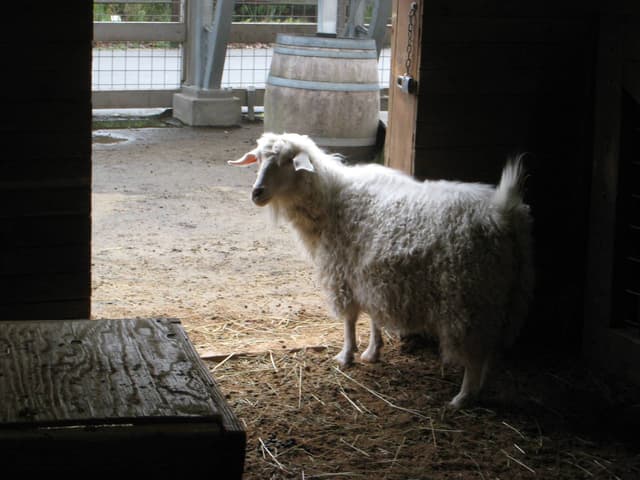 | Not recorded | Miniature | Cashgora fleece | Not recorded | No fleece below the knee; a cross of registered Pygmy and Angora foundation stock | 35 | Miniature size |
The pairs people confuse
**Nigerian Dwarf vs Pygmy.** Both are small and erect-eared, but color and build separate them. Nigerian Dwarf accepts any color or pattern and is the only miniature dairy breed ADGA registers 21. Pygmy's color is limited to three defined families (agouti, caramel or black) on a cobby, heavily muscled, dished-faced build, with a standard that calls for horns 12. Nigerian Dwarf looks like a small dairy goat; Pygmy looks like a small, stocky meat-type goat.
**Alpine vs Oberhasli.** Both are erect-eared, standard-size Swiss dairy breeds with French-derived color terms, but Oberhasli is fixed on one pattern: bay with black chamois markings, black permitted on does only 1. Alpine accepts eight named color patterns, from solid cou clair to broken pied 2. One fixed bay-and-black pattern is Oberhasli; anything that varies is Alpine.
**Boer vs Savanna vs Kiko.** All three are meat breeds. Boer's ears are pendulous, on a white body with a contrasting red-brown head 86. Savanna's ears are pendulous too, on a solid white body with a cashmere-type winter undercoat 95. Kiko's ears are erect, the fastest way to separate it from the other two 13, and its registry records the coat type as variable, though UC Cooperative Extension notes white and cream as the colors actually observed 2136.
**Angora vs Pygora.** Angora is a full-size fiber breed with a mohair fleece forming long ringlets on both sexes, and its standard calls for horns on both sexes too 327. Pygora, a miniature cross of Pygmy and Angora foundation stock, grows cashgora fleece, not mohair, in one of three PBA-defined types, none of it below the knee 35. Size is the fast tell: Angora standard, Pygora small.
**Nubian vs Mini Nubian.** Both share the same diagnostic trait, the long pendulous "bell-shaped" ear and the strongly convex Roman nose, drawn from the same genetics 17. Head and ear shape don't tell them apart. Size is the only visual tell, and it only works with something in frame to judge scale against.
**Toggenburg vs Alpine.** Toggenburg is fixed on one scheme: fawn to dark chocolate with defined white or cream facial and leg markings 1, a pattern no other breed here shares. Alpine's range is broader and doesn't include that pattern among its named colors 2. Markings that match exactly point to Toggenburg; anything else, to Alpine.
What this can't tell you
A few things limit how far a guide like this can go. Crosses are common, especially among meat and fiber breeds bred for production rather than show, and a crossbred animal can mix traits from this table without matching any single row.
Disbudding removes horns from most dairy goats as kids, so a hornless adult usually reflects a breeder's choice, not the standard, which is why horns sit last above rather than first. Coat color varies within a breed wherever the standard allows more than one pattern, which covers most dairy breeds and all three color-open minis (Nubian type, Nigerian Dwarf and LaMancha type all accept "any color or pattern").
Video compression and low light flatten ear shape, the most reliable trait here, in exactly the situation this guide is written for and exactly where it's least trustworthy. And even in good light, you often can't tell a registered animal from an unregistered lookalike by eye. Registration should be based on pedigree and paperwork, not on how closely one goat happens to match its standard.
Where to go from here
Identifying a breed and choosing one to keep are different jobs. Once you know, or have narrowed down, what you're looking at, whichgoat.com is built for the next question: which breed actually fits a given purpose, climate and setup, sourced the same way this guide is, from registry standards, extension sources and the Livestock Conservancy rather than marketing copy.
Sources (36)
- Breed Standards · American Dairy Goat Association (ADGA) · accessed 6 September 2026
- Breed Standards · American Goat Society (AGS) · accessed 6 September 2026
- Breed Standard For Angora Goats · American Angora Goat Breeders' Association (AAGBA) · accessed 6 September 2026
- Cashmere Goat Association · Cashmere Goat Association (CGA) · accessed 6 September 2026
- American Savanna Registry Standards · American Meat Goat Registry (AMGR) · accessed 6 September 2026
- Characteristics and Anatomy of the Boer Goat · American Boer Goat Association (ABGA) · accessed 6 September 2026
- Mini Nubian Breed Standard · Miniature Dairy Goat Association (MDGA) · accessed 6 September 2026
- American Boer Goat Association Breed Standards · American Boer Goat Association (ABGA), hosted copy via Prairie View A&M University · accessed 6 September 2026
- South African Savanna Breed Standards (AU) · Pedigree International · accessed 6 September 2026
- Mini LaMancha Breed Standard · The Miniature Goat Registry (TMGR) · accessed 6 September 2026
- Breed Standards (Guernsey) · American Dairy Goat Association (ADGA) · accessed 6 September 2026
- Pygmy Goat Breed Standard · National Pygmy Goat Association (NPGA) · accessed 6 September 2026
- Genetic Improvement and Crossbreeding in Meat Goats · Langston University, E (Kika) de la Garza American Institute for Goat Research · accessed 6 September 2026
- Mini Alpine Breed Standard · Miniature Dairy Goat Association (MDGA) · accessed 6 September 2026
- Breed Description · Myotonic Goat Registry (MGR) · accessed 6 September 2026
- Spanish Goat Conformation Guidelines · The Livestock Conservancy (Sponenberg & Bender) · accessed 6 September 2026
- Breed standard article · American Nigora Goat Breeders Association (ANGBA) · accessed 6 September 2026
- Breeding Better Savannahs · North American Savannah Association (NASA) · accessed 6 September 2026
- Spanish Goat · The Livestock Conservancy · accessed 6 September 2026
- Mini Lamancha Breed Standard · Miniature Dairy Goat Association (MDGA) · accessed 6 September 2026
- Kiko Goat in America · American Meat Goat Registry (AMGR) · accessed 6 September 2026
- Breed Standards · The Miniature Goat Registry (TMGR) · accessed 6 September 2026
- Mini Guernsey Breed Standard · Miniature Dairy Goat Association (MDGA) · accessed 6 September 2026
- Mini Oberhasli Breed Standard · Miniature Dairy Goat Association (MDGA) · accessed 6 September 2026
- Mini Saanen Breed Standard · Miniature Dairy Goat Association (MDGA) · accessed 6 September 2026
- Mini Toggenburg Breed Standard · Miniature Dairy Goat Association (MDGA) · accessed 6 September 2026
- RP375: Angora Goats in the Midwest · University of Nebraska-Lincoln Extension · accessed 6 September 2026
- North American Cashmere Goat Breed Standard · Cashmere Goat Association (CGA), Hoofprints newsletter · accessed 6 September 2026
- Cashmere Goat FAQ · Cashmere Goat Association (CGA) · accessed 6 September 2026
- Molecular Genetic Studies for Damascus Goat Breed Raised Under Egyptian Conditions · Journal of Applied Sciences Research (2013) · accessed 6 September 2026
- Comparison of yield characteristics of Damascus and Kilis goats · Tatar, Tuncer & Sireli 2019, Chilean Journal of Agricultural & Animal Sciences · accessed 6 September 2026
- Kalahari Red Goats · Oklahoma State University Breeds of Livestock · accessed 6 September 2026
- Principal Component Analysis of morphometric traits and body indices in South African Kalahari Red goats · South African Journal of Animal Science · accessed 6 September 2026
- Comparative study of growth patterns of Kalahari Red goats and West African dwarf goats · Omotosho et al. 2020, Nigerian Journal of Animal Production · accessed 6 September 2026
- Pygora Breed Standard · Pygora Breeders Association (PBA) · accessed 6 September 2026
- Meat & Fiber Goat Breeds · UC Agriculture and Natural Resources · accessed 6 September 2026